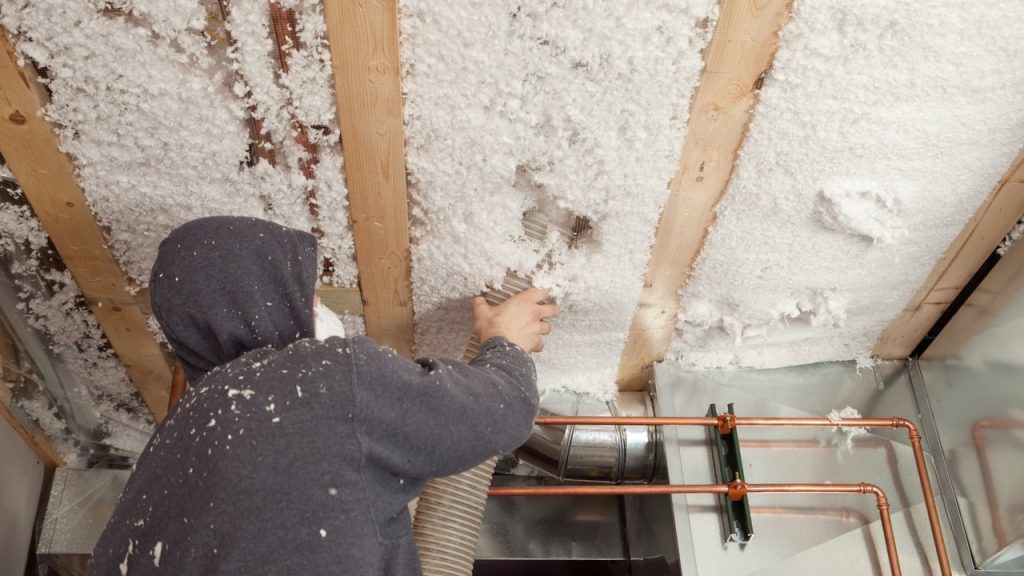
Insulation significantly affects home safety by influencing fire resistance, moisture control (mold prevention), and indoor air quality (IAQ), though the specific impact varies greatly depending on the type of insulation used and proper installation.
Fire Safety
- Non-Combustible/Fire-Resistant: Materials like fiberglass (unfaced) and mineral wool (rock wool) have high melting points and do not require additional chemical treatments to be non-combustible.3 They actively help slow the spread of fire and reduce the fire load of the building.4 Mineral wool, for instance, can withstand temperatures over 5$1,000^\circ\text{C}$ and doesn’t produce significant toxic smoke.6
- Combustible Materials: Materials like cellulose (made from recycled paper) and foam insulations (e.g., rigid foam board, spray foam) are inherently combustible.
- Cellulose is heavily treated with fire-retardant chemicals (like boric acid or ammonium sulfate) to meet safety standards and slow burning.
- Foam insulations may also contain fire retardants or char when exposed to fire, but their flammability and potential to release toxic gases and smoke in a fire are major concerns. They must be installed correctly, often with a thermal barrier, to comply with building codes.
- Vermin: Damaged or old insulation can attract rodents and pests, which can chew on electrical wiring embedded in walls, increasing the risk of an electrical fire.

Mold and Moisture Control
Insulation’s ability to resist moisture is key to preventing mold and mildew growth.
- Vapor Barrier: The primary function of insulation in this context is to maintain a consistent temperature on interior surfaces, preventing warm, moist air from meeting a cold surface and creating condensation. Proper installation, including the correct use of a vapor barrier/retarder when required, is essential for moisture control.
- Inorganic Materials: Fiberglass, mineral wool, and spray foam are inorganic and do not serve as a food source for mold growth. However, mold can still grow on their surface if they collect organic dust or dirt in a moist environment
- Organic Materials: Cellulose insulation is organic (paper-based) and can provide a food source for mold if it gets wet unless it is treated with mold-inhibiting chemicals (often the same borate fire retardants).
- Wet Insulation: When insulation gets wet (due to leaks, floods, or poor ventilation), it can lose its thermal performance and create an environment perfect for mold and mildew. Wet insulation, especially cellulose or fiberglass, should be dried immediately or replaced to mitigate the health risks associated with mold spores.