The R-value measures a material’s resistance to heat flow. The higher the number, the greater its insulating power. The required R-value for a home depends on the climate zone and the location of the insulation (e.g., attic, wall, or floor). A product’s total R-value is determined by multiplying its R-value per inch by its thickness in inches (e.g., a 6-inch thick batt with an R-3.5/inch rating is a total of R-21).
Insulation materials vary widely in composition, application, and effectiveness, which is quantified by their R-value (a measure of thermal resistance—the higher the R-value, the better the insulation). The R-values are typically given per inch of thickness.
Here are some charts for common insulation types and their respective R-value ranges per inch:
1. Fibrous/Batt and Roll Insulation
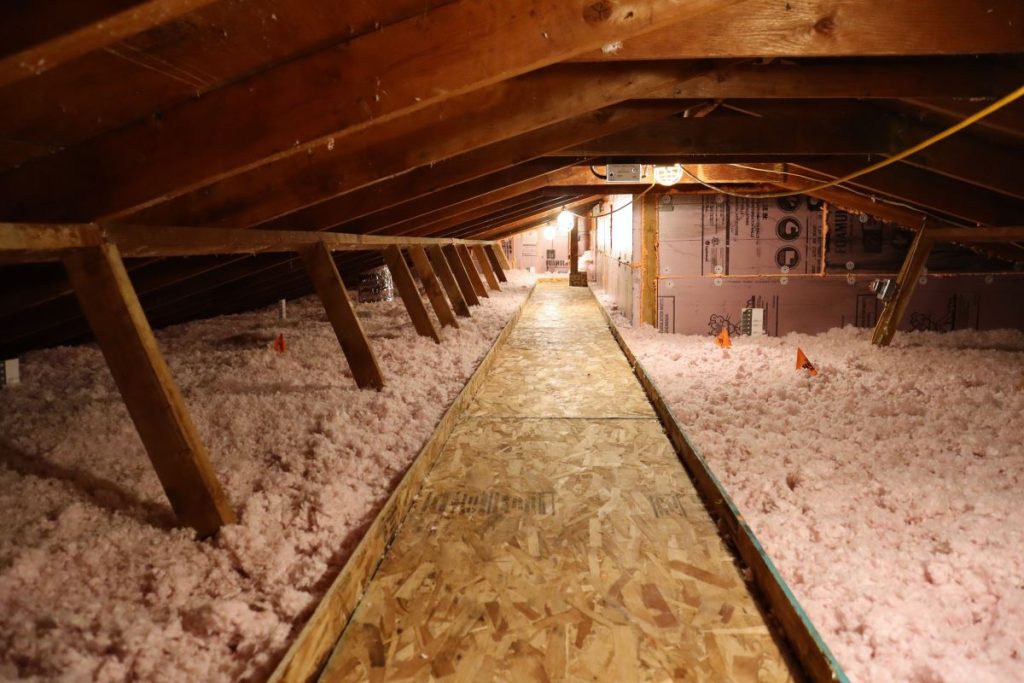
These are the most common and recognizable types, typically made of spun fibers. They are installed between joists and studs.
| Material Type | Forms | R-value per Inch | Key Characteristics |
| Fiberglass | Batts, rolls, and loose-fill (blown-in) | R-2.9 to R-3.8 (Batts) R-2.2 to R-4.3 (Blown-in) | Made from fine glass fibers. Inexpensive and readily available. Batts are pre-cut for standard framing. Blown-in is used for attics and existing wall cavities. |
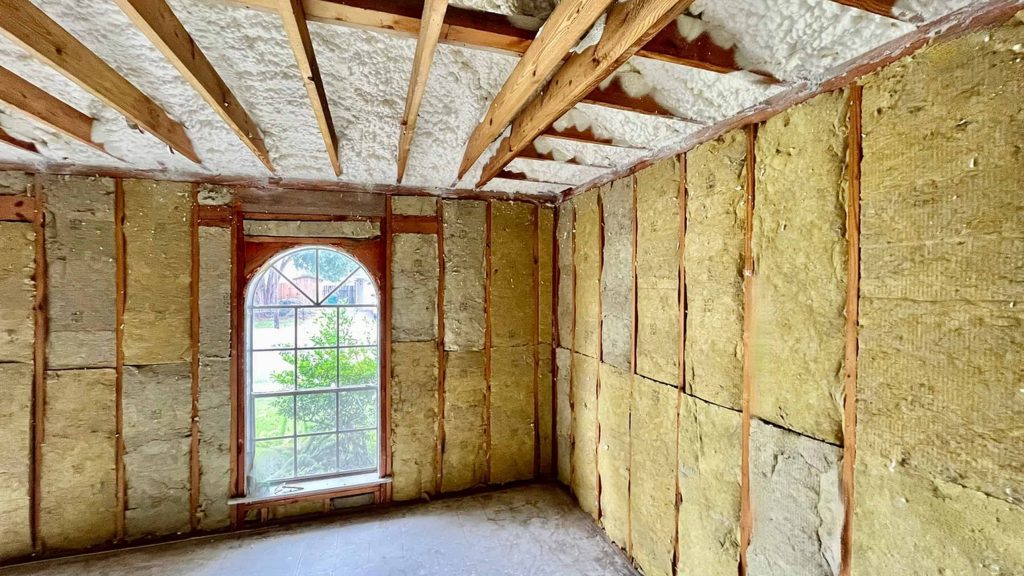
| Mineral Wool (Rock and Slag Wool) | Batts and loose-fill (blown-in) | R-3.0 to R-4.2 | Made from natural minerals or blast-furnace slag. Naturally fire-resistant and has a high density, which also provides good sound dampening. |
| Cellulose | Loose-fill (blown-in) | R-3.1 to R-3.8 | Made from recycled paper treated with chemicals to resist fire and pests. Dense and excellent for filling irregularly shaped areas and hard-to-reach cavities. |
2. Rigid Foam Board Insulation
Rigid foam insulation comes in panels of varying thicknesses. It is often used for exterior wall sheathing, in basements, and on cathedral ceilings. These materials offer higher R-values per inch than fibrous materials.
| Material Type |
Forms | R-value per Inch | Key Characteristics |
| Poly- iso- cyanurate |
Polyiso, foil-faced | R-5.5 to R-8.0 | Has the highest R-value per inch of any rigid board. Often faced with foil, which can act as a radiant barrier. Note: R-value may decline slightly over time (thermal drift). |
| Extruded Poly- styrene |
XPS, typically blue or pink | R-5.0 | Has a closed-cell structure, making it highly resistant to moisture absorption. Strong and durable, making it versatile for foundation and exterior applications. |
| Expanded Poly- styrene |
EPS, often white “beadboard” | R-3.8 to R-4.0 | The least expensive of the rigid foams. It is lightweight and can be cut to fit various applications. |
3. Spray Foam Insulation
Spray foam is applied as a liquid that quickly expands to fill all gaps, creating an exceptional air seal. It’s highly effective for oddly shaped areas, sealing leaks, and providing a continuous insulation layer.
| Material Type | Cell Structure | R-value per Inch | Key Characteristics |
| Closed-Cell Spray Polyurethane Foam | Closed-Cell | R-6.0 to R-7.0 | Denser and more rigid than open-cell. Acts as an air barrier and a vapor barrier. Provides structural support and is effective where maximum R-value in a small space is needed. |
| Open-Cell Spray Polyurethane Foam | Open-Cell | R-3.5 to R-3.8 | Less dense and more flexible/spongy. Excellent air barrier and helps with sound dampening. It is water-permeable and does not act as a vapor barrier. |
Would you like to see examples of these types of insulation? Visit our Project Gallery or Services page!